


Walk-In Tub or Low-Threshold Shower? Comparing Ella Options for Mobility, Space and Caregivers
Updated September 2026
Walk-in tub or low-threshold shower? Both an Ella's Bubbles walk-in tub and a low-threshold shower make bathing safer than a conventional tub, and the choice usually comes down to four things: whether you want to soak or to shower, how low the entry needs to be, how much help a caregiver needs to give, and how much plumbing and electrical work your bathroom can take. Here is a plain comparison drawn from the published product documents, followed by a short decision helper.
What a Walk-In Tub Gives You
- A seat and a soak. Every walk-in tub has a molded seat (17 inches high on the Ultra, for example) and a low threshold step-in, with soaking depths of roughly 14 to 17 1/2 inches on the models toured in the product videos.
- Therapies. Air massage, hydro massage with an in-line heater, independent foot massage, Infusion microbubble, chromatherapy and a heated seat and backrest are available in packages, depending on the model.
- A shower too. The 2-piece and 5-piece fast-fill faucets include a pull-out hand shower, and the optional shower column adds a 10 inch rain head for seated or standing showers with any Ella deck-mount faucet; see can I shower in a walk-in tub.
- Dual 2 inch drains on most models (single on models such as the Standard, Zen, Flow, Front Entry and LayDown), gravity driven, with the house drain connected to either side.
- Electrical. Jetted packages need one or more dedicated GFCI-protected circuits installed by a licensed electrician. A soaking tub with only a heated seat is specified at 15 amps, and a soaking tub with no powered options has nothing to plug in.
- Space. Models run from the 26 inch wide Mobile and the 28 by 48 inch Flow to the 36 by 72 inch ShaK and the two-seat tubs, and outward-swing doors need clear floor space in front of the tub.
What a Low-Threshold Shower Gives You
- The lowest entry. AcrylX barrier-free bases have a beveled roll-in entry of 3/4 inch to 1 1/8 inch depending on size, SMC bases are 1 inch or 1 1/8 inch, and the one-piece and three-piece stalls have a 4 inch threshold.
- A seat if you want one. Folding benches and seats rated from 300 to 600 pounds, a 36 by 60 base with a molded seat, and stalls with a molded seat; Armorcore walls let bars and seats go anywhere.
- Caregiver features. The barrier-free base package options include a weighted anti-bacterial nylon shower curtain, a stainless curtain rod, a slide bar with hand shower and the collapsible rubber dam that holds water in while a wheelchair rolls over it. The 62 by 32 inch base is presented on its product page as the caregiver base.
- No electrical. Shower bases, stalls and wall kits list no electrical requirement; the work is plumbing (valve, drain) and wall finishing.
- Weight and handling. Bases range from about 60 pounds to about 135 pounds uncrated per the product pages, and cultured marble bases need two people; one-piece stalls must fit through every doorway, so remodels often use the three-piece kits. The full range is in Ella shower kits and bases.
Video: The Ella Range in One Overview

Chapters in this video
- 0:00 Safety Features of Ella's Tubs Ella's Bubbles offers various tubs designed to minimize bathroom injuries, including transfer tubs, Home Care tubs, and Hoist assist tubs.
- 0:38 Barrier-Free Shower Kit Options For wheelchair users who prefer a shower, Ella's Bubbles provides a barrier-free walk-in shower kit with customizable options and a compressible rubber dam.
- 1:01 Wide Range of Tub Sizes Ella's Bubbles offers the widest range of walk-in tubs on the market, from extra tall to extra small, including tubs for one, two, and bariatric bathers.
- 1:28 Fast Fill and Dual Drain Technology Ella's walk-in tubs feature fast-fill faucets for quick filling and exclusive dual drain technology for efficient water removal.
- 1:40 Customer Support and Shipping Ella's Bubbles provides highly knowledgeable Chicago-based customer support, live video conferences, nationwide dropship availability, and quick shipping.
Watch: Why Choose Ella's Bubbles Walk-In Tubs with chapters and a full transcript.
This overview opens with the reason both product lines exist: bathroom slip and fall injuries. It names the transfer tub with its extra wide doorway for wheelchair entry, the HomeCare tub for bathers who need extra assistance, and the HoistAssist tub, a fast-filling tub with a lift chair. It shows the grab bars placed for stability, then turns to the barrier-free walk-in shower kit for wheelchair users who prefer a shower, which can be outfitted with wall tiles, shower bases, grab bars, several styles of folding seat, an extended hand shower and a caregiver shower curtain, plus the compressible rubber dam that helps keep water in. It closes with the breadth of the tub line, from extra small to extra tall, one seat or two, bariatric sizes, independent foot massage, heated seats, fast-fill faucets and the dual four-port T-type drains, and with Chicago-based customer and technical support, including the option the video describes of a live video session with the team.
Video: The Shower Dam That Lets a Wheelchair Roll in

Chapters in this video
- 0:00 Introducing The Ella Shower Dam The Ella flexible shower dam is presented, highlighting its use for wheelchair users to easily roll into and out of a barrier-free shower base.
- 0:28 Installing The Shower Dam The installation process begins with measuring, cleaning surfaces, and applying the shower dam to the shower wall and floor.
- 1:25 Sealing The Shower Dam Painter's tape is applied, and a thin bead of silicone is used to seal the lower edge and end caps of the shower dam.
- 1:44 Final Result And Effectiveness The video shows the final appearance of the installed shower dam and demonstrates its effectiveness in containing water within the shower stall.
Watch: The Ella Shower Dam u2014 Keep Water In, Roll In With Ease with chapters and a full transcript.
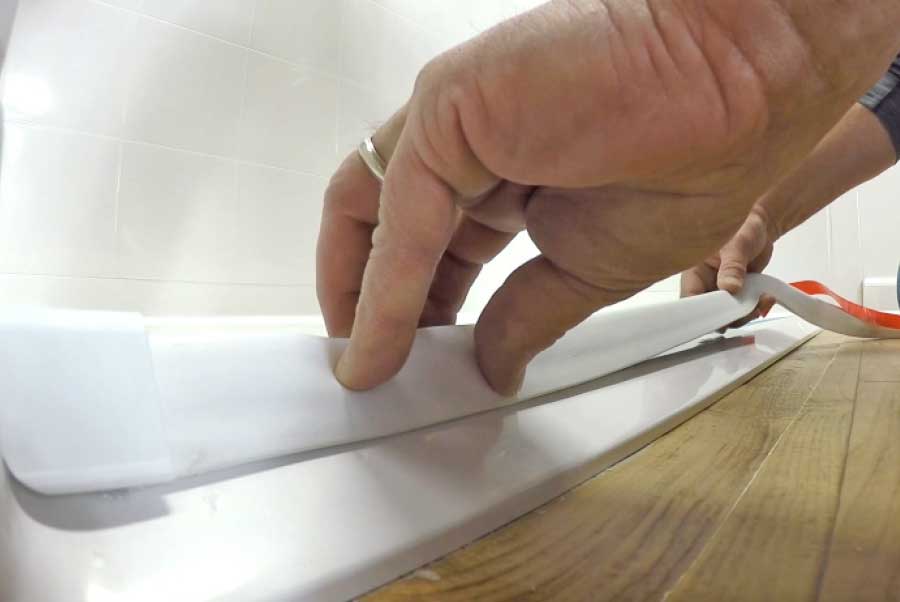
If the lowest possible entry is what matters, this is the part to understand. The flexible, compressible dam sits at the edge of a barrier-free base so a wheelchair rolls over it while the water stays in. The video shows the installation: measure, clean the surfaces with denatured alcohol, lay a tape guide line, cut the dam to length and insert the plastic end cap, silicone any gaps, peel back the adhesive tape about an inch and seat the dam snug against wall and floor while pulling the tape along, then press its full length, remove the guide tape, apply painter's tape on both sides and run a thin silicone bead along the lower edge on both sides and at both end caps. Full base and dam steps are in installing Ella shower bases and the flexible shower dam.
The Assisted Line, When a Caregiver Does Most of the Work
If the bather cannot bathe alone, look past the standard walk-in models to the assisted line. The HomeCare Transfer Bathtub 32 by 60 is for assisted bathing only: a caregiver sets the temperature on a thermostatic valve, fills an 80 gallon fast-fill tank, transfers the bather onto the seat through the two-latch aluminum door that swings 180 degrees, and fills the tub from the tank in about 90 seconds, with a hand shower on a 24 inch slider. The HoistAssist pairs a 30 by 60 tub with a battery-powered hoist rated to about 440 pounds. The CareGiver LD6632 combines a lay-down tub with a water storage tank and heater. They are compared in assisted bathing options compared.
A Short Decision Helper
- If you want to soak, warm sore joints or use massage therapies, choose a walk-in tub. If you only shower, choose a low-threshold shower.
- If a wheelchair must roll straight in, a barrier-free base at 3/4 to 1 1/8 inches is the lowest entry; among tubs, the Transfer family's L-shaped door with no side wall at the seat is the wheelchair-transfer design, compared in the transfer tub family guide.
- If a caregiver is doing the bathing, look at the HomeCare, HoistAssist or CareGiver units, or a shower with the caregiver curtain, dam and hand shower on a slide bar.
- If the bathroom cannot get a new dedicated circuit, a soaking tub or a shower avoids the electrical work; every jetted package needs GFCI circuits.
- Measure the path into the bathroom before deciding: tubs ship crated (for example 32 inches wide for the Elite crate), and one-piece stalls do not disassemble.
Related Guides
- Is a 3/4-Inch Shower Base Threshold ADA Compliant for a Commercial Building?
- Should I choose a walk-in tub or a roll-in shower?
- What Is a Shower Dam and When Do You Need One?
Common Questions
Should I get a walk-in tub or a walk-in shower?
Which gives the lowest wheelchair threshold?
Can I have both a soak and a shower?
What does a caregiver need?
Which needs more plumbing and electrical work?
Do Ella showers carry a warranty?
Does Ella make custom-size shower bases?
Who can help me choose?
For anything model-specific, including the exact spec sheet for the tub or shower on your order, open a ticket at ellasbubbles.com/support or call (800) 480-6850 and the team will be glad to help.
About this guide. Answers in the Ella’s Bubbles Support Center are compiled from real conversations with tub owners, our technicians’ notes and the product documentation, then reviewed by our team. Tub models and options have evolved over the years, so a detail here may differ slightly from your exact tub. If something looks different on yours, send us your serial number and a specialist will confirm it for your model.
Did this solve your question?
If not, open a ticket and our team will pick it up from here.
Open a Support Ticket Videos