


Why Is Water Appearing at the Bottom of My Walk-In Tub Door?
Updated November 2026
Water at the bottom of a walk-in tub door while the tub is full usually means the door is not pressing evenly into its seal along the bottom edge, and the cause is more often a leveling leg that is not carrying weight or a seal that has shifted in its channel than a failed gasket. It is rarely a failed part, and most cases are corrected at home without ordering anything. Water that shows up only after you drain and open the door is drainage, not a leak, and is normal. The timing test that separates the two is in Water on the Floor After a Bath: Door Leak or Drain Leak?, the general checks are in Why Does My Walk-In Tub Door Leak at the Bottom?, and the sections below take the bottom edge and the bottom striker one cause at a time.
First, Confirm It Is a Leak and Not Drainage
Fill the tub with the door closed and locked, then watch the outside of the door frame, the sill and the floor while the tub is full. Dry while full means the seal is doing its job. Anything you see after draining is water running off the inside face of the door, out of the gasket and down the sill, which happens whenever an outward-swing door opens after a bath and can run into the latch openings in the jamb. On a brand new tub this surprises people, and it is not a fault.
Three other things look like a bottom-of-door leak and are not:
- A little water sitting below the drain plug after draining. That is the trap, which holds water so sewer gas cannot come back up. The level stays the same rather than rising, and the tub floor around the drain is dry once draining finishes.
- A few drops on the floor beneath the tub under the striker plate after draining. The opening where each locking pin seats is not sealed underneath, and Ella tubs are not equipped with a drain for it, so water that collects in the door track can pass through that hole. No part is missing. If the drip bothers you, or the tub sits over a finished ceiling, a licensed plumber can fit a catch and hose under that opening.
- Water that runs down the outside of the door on the hinge side only while the jets or the hand shower are running. That is spray funneled into the gap between the door and the tub by a 4-fold shower screen sitting too far out on the deck, and the fix is to move the screen to the inside edge of the deck.
The pattern that needs attention is a steady run from the frame or the bottom edge while the tub is full, including water sitting in the door frame and running down toward the latch hole.
Why the Bottom Edge Leaks: Start with the Legs
The door seal is one continuous loop, and it closes watertight only when the door frame holds its shape. The number one cause of a door leak is a leveling leg that is not touching the floor. A tub can read level across the deck while one leg floats, because the other legs are holding the frame up. The floating leg lets the shell bow under the weight of the water, which pulls the door frame out of shape and the door out of alignment with its seal, so water escapes along the bottom edge, at the side of the door, or at the door frame. All legs must touch the floor with equal weight distribution or the frame and shell can warp, so this check comes before any seal or latch work. Floors settle and leveling legs work loose over time, so this applies to a brand new installation and to a tub that has stayed dry for years.
- Drain the tub completely and take off the front apron. Any tile or trim over the apron has to come off first.
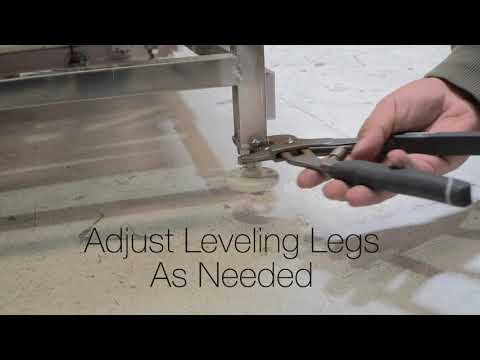
- Check every leveling leg by hand. Many Ella tubs have up to eight leveling legs, and each one should sit solidly on the floor with no gap and carry its share of the weight. Adjust any leg that floats until it does and the door closes smoothly.
- Set a level on the deck and confirm the tub still reads level in both directions after the adjustment.
If one edge of the door stands away from the sealing surface while the other edge meets it evenly, stop before you fill. Why Is There a Gap on One Side of My Walk-In Tub Door? explains why the tub should stay empty until that gap is corrected, since water pressure on a misaligned door can leak and can change the alignment further.
Reseat the Seal and Check the Latch
With the legs set, look at the seal all the way around the door opening, not only at the wet spot. A seal that has shifted off center in its channel leaves a section that the door cannot compress fully. Press it back into its channel evenly the whole way round, then wipe the seal and the door frame clean so no debris sits between them. A reseated seal usually retests dry. If the handle no longer pulls the door firmly against the seal, that is a latch or lock nut adjustment, not a seal problem: the lock nut behind the apron adjusts how hard the door closes, and you tighten it until the handle pulls the door snug against the seal without forcing. From then on, complete the full handle turn every time you close the door, because a door that is only partly latched does not compress the seal evenly. Keep weight off the door during every bath as well. Leaning on the door changes its alignment, and a seal that has been leaned on can be damaged.
On Transfer Tubs: The Bottom Striker and the Two Pins
The Transfer family's L-shape door locks with two tapered pins that drive out of the latch edge into a striker plate on the frame, and it is the lower pin and striker that searches about water at the bottom striker are asking about. What Is a Striker Plate on a Walk-In Tub Door? explains the part. Open the door, turn the handle to the locked position and look at the two pins. Each should extend about 1 1/2 inches. A bottom pin that sits noticeably shorter than the top one means the pins have skipped a gear inside the door, so the bottom of the door is not being pressed into the gasket as hard as the top, and water finds that end first. The bottom pin can be adjusted on its own.
Then put a hand on the striker plate. It should not move. If it wobbles, tighten it; the striker plate nuts are reached from inside the front apron. Confirm both pins enter the striker cleanly when you lock the door. If the plate still wobbles or shows a crack at the weld, photograph it with a tape measure in the frame, because a failing weld is replaced as a warranty part once the team has reviewed the photos. Never open the door until the tub has drained, and never lean on the door. On a newly installed tub the same three checks, pins, seal and legs, are walked through in Why does water seep at the door striker on a new level tub?.
When the Water Is Not Really Coming from the Bottom
The bottom of the door is where water from higher up tends to gather, so watch where the water first appears as the tub fills, not only where you see it, because two other leaks run down to the bottom edge and get blamed on it. If water appears at or just below the handle while the bottom edge stays dry, it is following the handle screws through the door panel. That is fixed by removing the screws, resealing them with silicone and reinstalling them, and Ella's technical support recommends doing that and testing before ordering a new seal, as Water Leaking From the Door Handle Screws explains. Because that drip can run down inside the apron, it sometimes shows up as a wet floor, so treat it promptly. If the water starts at the hinge side and keeps coming after the hinges have been reset, it is getting in behind the bottom hinge and through the bolt holes and along its bolts, and realigning the hinges alone does not close that path. The door has to slide off so the laminate plate at the bottom hinge can be removed and the area behind the hinge and around the bolts resealed. Door Still Leaks at the Hinge After Resetting the Hinges gives those steps. Silicone sealant for the handle screws or the hinge plate is a hardware-store item, and it needs the full cure time stated by the sealant manufacturer before the tub sees water again.
When the Water Is Under a Shower Screen Instead
Sometimes the puddle is not at the tub door at all. If your tub has a 4-fold glass shower screen and the water gathers at the bottom of that screen, it is a setup matter. The screen seals with an inward-angled rubber gasket that brushes the tub deck lightly and evenly, so the height and level of the wall channel decide whether it stays dry. Set too low, the gasket gets damaged. Set too high, water escapes underneath. Level the screen, set the height so the gasket seats on the deck, and confirm the gasket is angled inward toward the tub. What Is the 4-Fold Shower Screen on a Walk-In Tub? describes how the screen is built and how it is cared for.
The Refill Test, and When to Open a Ticket
After any adjustment, close and lock the door, fill to a normal bathing level and watch the gasket line, the bottom edge and both sides for 20 minutes, keeping weight off the door the whole time. Where the first drop appears decides what you do next.
- Along the bottom edge or in the frame, running toward the latch hole. This is the uneven compression pattern. Go back to the legs, the seating of the seal and the handle tension. Do not run silicone or caulk over the seal.
- At or just below the handle, with the rest of the door edge dry. Reseal the handle screws and test again before a new door seal is considered.
- At the hinge side, even after the hinges have been reset. Reseal behind the bottom hinge and around the bolts.
- Nowhere during the test. If the door is dry while full, you are done. If water still appears during baths, look at what changes during a bath, especially any weight resting against the door.
If it still leaks after the legs are set, the seal is reseated and the latch is adjusted, the seal itself may be worn, and a seal that leaks after reseating is replaced with a model specific part. The door and the door seal are Lifetime Limited Warranty parts, and a replacement ships under the parts warranty once the team has verified the problem with photos. Leaks caused by a tub that is out of level, or by a door whose alignment was changed by weight leaning on it, are excluded from coverage, which is one more good reason to confirm leveling first. Open a ticket at ellasbubbles.com/support or call (800) 480-6850 with your model and serial number, a photo of the exact spot where the water appears, a photo of the seal around the full door opening, a photo of the level on the deck and a short video of where the water first appears as the tub fills. Ella does not send technicians, so a local licensed plumber does the labor and any work inside the apron, and the team can answer that person's questions by phone or email.
Related Guides
- How Do I Clean, Reseat, and Replace My Walk-In Tub Door Seal?
- Door seal or gasket looks worn, loose, or leaks: care, repair, and replacement
- My Door Rubs the Frame When It Closes: Fixing Tub Bow with the Leveling Legs
- Door Handle Loose, Wobbly or Hard to Turn: Tightening the Bolt Under the Cap and Adjusting the Lock Nut
- How Do I Check That My Walk-In Tub Is Level After Installation?
Related Videos
Chapters in this video
- 0:00 Leveling Legs Are Critical Many Ella's Bubbles walk-in tubs have up to eight leveling legs to evenly disperse weight and ensure proper function.
- 0:14 Secure Each Foot The technician checks if each foot is securely on the ground, as an unsealed door could leak.
- 0:28 Check Tub Levels The technician checks levels on all sides of the tub to ensure all feet sit securely on the floor.
- 0:41 Proper Door Alignment Proper leveling assures correct door alignment and closure for your walk-in tub.

Chapters in this video
- 0:00 Door Rubbing the Jamb The video explains that a door rubbing the jamb indicates the tub is bowed down.
- 0:33 Ensuring Tub is Level Ella's Bubbles tubs have at least six leveling legs that must be solidly on the ground to prevent leaks.
- 0:47 Making Final Adjustments Each leg is adjusted to rest firmly on the floor, and careful measurements are taken to achieve a level tub.

Chapters in this video
- 0:00 Clean Your Door Seal Regularly The video explains how to clean the door seal and frame to prevent leaks and debris buildup.
- 0:38 Replacing a Loose Door Seal The video demonstrates how to replace a loose or damaged door seal by applying a thin bead of silicone to the gasket channel.
- 1:02 Adding Silicone to Inward Doors The video shows how to add a bead of silicone to the corner of the gasket where it meets the frame on inward swing doors.
- 1:23 Extend Gasket Life The video recommends leaving the walk-in tub door slightly open when not in use to extend the gasket's flexibility and life.

Common Questions
Is it normal for water to drip under the tub after draining?
Does water at the bottom of the door mean the seal has failed?
Can my tub be level and still leak at the door?
How long should I watch the door during a fill test?
How far should the locking pins extend on a Transfer tub door?
Should I order a new door seal as soon as the door leaks?
Can I run silicone or caulk over a leaking door seal?
Why does leaning on the door cause water to collect?
Is a door leak caused by an unlevel tub covered by warranty?
What should I send if the water keeps collecting at the door?
About this guide. Answers in the Ella's Bubbles Ella's Bubbles Walk-In Tub Support Center are compiled from real conversations with owners, our technicians’ notes and the product documentation, then reviewed by our team. Models and options have evolved over the years, so a detail here may differ slightly from yours. If something looks different on yours, send us your serial number and a specialist will confirm it for your model.
Did this solve your question?
If not, open a ticket and our team will pick it up from here.
Open a Support Ticket Videos