


Why Is Water Collecting at the Bottom of My Walk-In Tub Door?
Water collecting at the bottom of your walk-in tub door, or sitting in the door frame and running down toward the latch hole, usually means the door is not compressing its seal evenly on that side. It is rarely a failed part, and most cases are corrected at home without ordering anything. Start with the checks in Why Does My Walk-In Tub Door Leak at the Bottom?, then use the standing test described here to find the exact spot where the water first appears.
What Water at the Bottom of the Door Is Telling You
The door seal is one continuous loop, and it closes watertight only when the door frame holds its shape. A tub that sits even slightly out of level bows the shell, and a bowed shell pulls the door frame out of shape. When that happens the seal cannot close evenly, and water escapes along the bottom edge, at the side of the door, or at the door frame. Floors settle and leveling legs work loose over time, so this applies to a brand new installation and to a tub that has stayed dry for years.
The bottom of the door is also where water from higher up tends to gather. That is why it helps to think about where the water starts, and not only about where you see it. The usual starting points are:
- A section of seal that is not being compressed evenly, because a leveling leg is not bearing weight.
- A seal that sits off center in its channel, or that has debris on it or on the frame.
- A handle that no longer pulls the door tight against the seal. That is a latch or lock nut adjustment, not a seal problem.
- The handle screws. They pass through the door panel, so water in the tub can follow them through the door and drip down the outside. The sign is water at or just below the handle while the rest of the door edge stays dry.
- The bottom hinge mounting, where water sits against the plate behind the hinge and works through the bolt holes and along the bolts.
What to Check, in Order
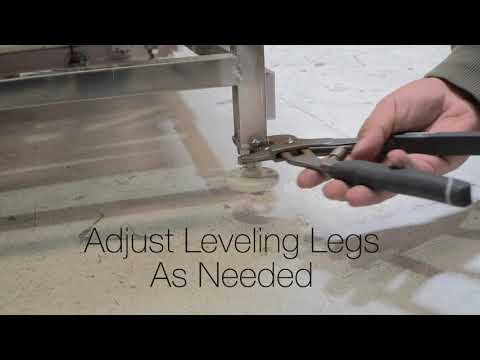
- The leveling legs. Drain the tub and remove the front apron. Level the deck in both directions and confirm every leveling leg sits solidly on the floor with no gap. Many Ella tubs have up to eight leveling legs, and each one has to carry its share. Adjust any leg that floats until the door closes smoothly.
- The full gasket loop. Look at the seal all the way around the door, not only at the wet spot. If a section is off center or not fully seated, press it back into its channel evenly, then wipe the seal and the frame clean of any debris. A reseated seal usually retests dry.
- The handle position as you close the door. The handle should pull the door firmly against the seal. If it no longer does, the tension is set at the lock nut behind the apron, and that adjustment comes before any further work on the seal.
- The standing test. Fill the tub and let it stand for 20 minutes. Watch the bottom edge and both sides so you see exactly where the water shows up first.
- Weight on the door. Keep weight off the door during the test and during every bath. Leaning on the door changes its alignment, and a seal that has been leaned on can be damaged.
If one edge of the door stands away from the sealing surface while the other edge meets it evenly, stop before you fill. Why Is There a Gap on One Side of My Walk-In Tub Door? explains why the tub should stay empty until that gap is corrected, since water pressure on a misaligned door can leak and can change the alignment further.
Reading the 20 Minute Standing Test
Where the first drop appears decides what you do next.
- Along the bottom edge or in the frame, running toward the latch hole. This is the uneven compression pattern. Go back to the legs, the seating of the seal and the handle tension. If the door still leaks after leveling and reseating, do not run silicone or caulk over the seal. A seal that leaks after reseating is replaced with a model specific part.
- At or just below the handle, with the rest of the door edge dry. The handle screws need to be removed, sealed with silicone and reinstalled, as described in resealing the door handle screws. Ella's technical support recommends doing this and testing again before a new door seal is considered. Because that drip can run down inside the apron, it sometimes shows up as a wet floor, so treat it promptly.
- At the hinge side, even after the hinges have been reset. The water is getting in behind the hinge and through its bolts instead of past the seal. Realigning the hinges alone does not close that path. The fix is to slide the door off, remove the laminate plate at the bottom hinge and reseal behind the bottom hinge and around the bolts.
- Nowhere during the test. If the door stays dry with the tub standing full, look at what changes during a bath, especially any weight resting against the door.
When the Water Is Under a Shower Screen Instead
Sometimes the puddle is not at the tub door at all. If your tub has a 4-fold glass shower screen and the water gathers at the bottom of that screen, it is a setup matter. The screen seals with an inward-angled rubber gasket that brushes the tub deck lightly and evenly, so the height and level of the wall channel decide whether it stays dry. Set too low, the gasket gets damaged. Set too high, water escapes underneath. Level the screen, set the height so the gasket seats on the deck, and confirm the gasket is angled inward toward the tub. What Is the 4-Fold Shower Screen on a Walk-In Tub? describes how the screen is built and how it is cared for.
Warranty Coverage and Getting Help
The door and the door seal are Lifetime Limited Warranty parts, and a claim is verified with photos. Leaks caused by a tub that is out of level, or by a door whose alignment was changed by weight leaning on it, are excluded from coverage, which is one more good reason to confirm leveling first. If the water keeps collecting after the checks above, send a photo of the exact spot along with your model and serial number through ellasbubbles.com/support, or call (800) 480-6850.
Ella does not send technicians. When a replacement seal or another part is needed, it ships under the warranty after the problem is verified, and a local licensed plumber does the labor. Silicone sealant for the handle screws or the hinge plate is a hardware-store item, and it needs the full cure time stated by the sealant manufacturer before the tub sees water again.
Related Guides
- Door Handle Loose, Wobbly or Hard to Turn: Tightening the Bolt Under the Cap and Adjusting the Lock Nut
- Door seal or gasket looks worn, loose, or leaks: care, repair, and replacement
- How Do I Check That My Walk-In Tub Is Level After Installation?
Related Videos


Common Questions
Does water at the bottom of the door mean the seal has failed?
How long should the tub stand full when I test the door?
Can I run silicone or caulk over a leaking door seal?
Why does leaning on the door cause water to collect?
Is a door leak caused by an unlevel tub covered by warranty?
What should I send if the water keeps collecting at the door?
About this guide. Answers in the Ella's Bubbles Ella's Bubbles Walk-In Tub Support Center are compiled from real conversations with owners, our technicians’ notes and the product documentation, then reviewed by our team. Models and options have evolved over the years, so a detail here may differ slightly from yours. If something looks different on yours, send us your serial number and a specialist will confirm it for your model.
Did this solve your question?
If not, open a ticket and our team will pick it up from here.
Open a Support Ticket Videos