


How Do I Choose a Walk-In Tub With a Low Threshold and Slip-Resistant Floor?
Updated October 2026
Every Ella walk-in tub already comes with a low step-in threshold and a textured, slip-resistant floor, so you do not need to hunt for a model that has those two features. The choice that matters for safe daily use is the door style, followed by the seat, the grab bars and the space in your bathroom. The standard safety features are listed in Which Ella Walk-In Tubs Have Textured Floors, Grab Bars and Easy Entry?, and this page turns them into a simple order of decisions so you can choose with confidence.
Start with What Every Model Already Includes
It helps to know what is not a decision at all. The first video on this page shows the low threshold, easy entry design and the textured slip resistant floor, and describes entering and exiting as safe, easy and convenient, even from a wheelchair. In the second video an owner describes how the low threshold makes getting in and out of the tub a breeze. These basics are built into the whole line:
- A low step-in threshold and a textured, slip-resistant floor on all walk-in models.
- A seat height of 17 inches on most models, similar to a standard chair. The seat is molded and not adjustable.
- Deck and wall-mounted grab bars placed for entry and exit. Most seated tubs include one or two deck-mount bars, and more can be added to the surrounding walls.
- Fast-fill faucets with an extendable hand shower, so you can rinse while seated.
- An optional heated seat and backrest, plus easy-touch or digital controls.
Because these features are standard, comparing models for safe daily use comes down to door style, size and therapy package and not to whether the safety basics are included. If you are still getting familiar with the category, What is a walk-in tub, and how is it different from a regular bathtub? explains the door, the threshold, the seat and the floor in more detail.
Choose the Door Style That Matches How You Get in
The door decides how you approach the tub, where you stand while you close it and how much room you need beside it. Ella builds five door styles, and each one suits a different way of entering.
| Door style | Models | How it opens | Published step-in figure | Best for |
|---|---|---|---|---|
| Stainless steel inward-swing door | Elite, Petite, Royal, Deluxe, Ultimate | Opens inward toward the seat and is held shut by the water once the tub fills | not listed | Bathers who step in while holding the grab bar and want a door that is removable for cleaning |
| Acrylic S-shape inward door | Standard, Flow, Zen, Zen60 | Opens inward | not listed | Bathers who like an inward door on an acrylic door platform |
| Outward-swing U-shape door | Capri, Monaco, Front Entry, Mobile, Lounger, Shak, Big4One, Tub4Two | Swings outward, PVC composite and tempered glass with a 3-latch gear and shaft mechanism | Roughly 3 1/2 to 4 inches on models like the Capri | Bathers who want nothing to step around inside the tub |
| Outward L-shape door | Transfer26, Transfer30, Transfer32, Transfer60, TransferXXL | Extra-wide door that swings outward a full 172 degrees | not listed | Wheelchair users making a seated side transfer |
| Glass side-entry door | LayDown 30x60, LayDown 32x72 | Tempered glass side door in a brushed aluminum frame | not listed | Bathers who want to recline at full length |
Here is what those differences mean in your bathroom. With an inward door you hold the grab bar, step over the low threshold, close the door while standing, then sit and fill, so it suits a bather who is steady on their feet for those few moments. An outward door leaves the inside of the tub clear, since there is nothing to step around once you are in. The L-shaped door is the one built for wheelchair users, because it opens wide enough for a seated side transfer and is designed to fit over a toilet in a tight room. The Ultra uses the inward design in a brushed aluminum frame with frosted glass, and the Companion and Escape two-seat tubs use an inward stainless door as well, so couples and larger bathers have inward options too.
Look at the Threshold, the Seat and the Grab Bars for Your Own Body
The number that decides how easy a tub is to enter is the step-in threshold, not the outside height of the tub. A walk-in tub is entered through a sealed door, so its wall can be taller without being harder to get over. The Elite, for example, has an actual size of 30 inches wide by 52 inches long by 35 inches high, yet what you step over is only the low threshold in the door opening. On models like the Capri that step-in is roughly 3 1/2 to 4 inches. Do they make a bathtub that is only 15 inches high? explains why overall height and step-in height are two different things.
When you compare models, check these three points:
- The step-in. Ask your Ella dealer or the team at (800) 480-6850 for the threshold figure on the specific model you like, and compare it with what you can comfortably lift a foot over today.
- The seat. Most models have a 17 inch seat height, similar to a standard chair. The seat is molded and not adjustable, so sit on a chair of that height at home and see how standing up from it feels.
- The grab bars. Most seated tubs include one or two deck-mount bars. Think about which hand you reach with as you step in, and plan extra bars on the surrounding walls if you would like more support.
Match the Tub to the Bather and to Who Helps
Once the door style is settled, the next choice is the kind of bathing the tub has to support. What is a walk-in tub and who is it designed for? describes the groups each tub is built around, and they map neatly onto the lineup:
- Independent seated bathing. Any of the inward or outward seated models gives you the low threshold, the textured floor and the chair-height seat.
- Wheelchair transfer. The Transfer models are built so a bather can move in from a wheelchair, and the TransferXXL at 36 by 55 inches is a wheelchair accessible, bariatric model for bathers who need extra width.
- Assisted bathing. The HoistAssist pairs a transfer tub with its own battery hoist for a bather who cannot bear weight or slide across, and the HomeCare is designed exclusively for assisted bathing with a caregiver present.
- Lying down. Only the two LayDown tubs are built for a full recline, and both keep a low threshold and a textured slip-resistant floor. Lying down in a seated walk-in tub is not recommended and could be hazardous, as Can you lie down in a walk-in tub? explains.
Space rarely rules a tub out. Every Ella tub fits the three-wall alcove a standard 60 inch bathtub used to occupy, and most 52 and 55 inch models use an extension panel to fill the gap at one end. Plan around the actual size on the spec sheet, and leave room for an outward door to swing if that is the style you choose.
Habits That Keep Daily Use Safe
The threshold and the floor do their best work when the bath follows the same simple routine each day. You enter first, close the door, then fill. After the bath you open the drain, wait, then open the door. Ella walk-in tubs drain by gravity through two 2-inch drains, and once connected to a proper 2-inch drain line a tub typically empties in two minutes or less, so the wait is short.
While bathing in a seated tub, sit fully in the seat with your back against the backrest. The owner's manuals ask bathers not to slouch, not to lie down in the footwell and not to put their feet up on the opposite side, because the footwell is the deepest part of the tub. Any bather who is paralyzed or does not have all limbs functioning must be attended by a caregiver at all times and use an installed safety belt. With those habits in place, the low threshold, the textured floor, the seat and the grab bars work together every single day.


Chapters in this video
- 0:00 Delightful Ella's Walk-In Tub The customer expresses delight with their Ella's walk-in tub.
- 0:17 Innovative Jet Design The customer highlights Ella's innovative jet design and hydro massage.
- 0:31 Light Chromatherapy Feature The customer enjoys the light chromatherapy feature, which sets a beautiful tone.
Watch: Low Threshold Walk-In Tub with Light Chromatherapy | Ella’s Bubbles with chapters and a full transcript.
Related Guides
- What are the door widths and step-in heights for each Ella door style?
- Step-In Threshold Heights by Model and How Low It Can Go
- Choosing a Walk-In Tub on Video: Measuring Yourself, Doorways, Door Styles, Therapies, Hot Water and the Line Overview
Related Videos

Chapters in this video
- 0:00 S-Class Tub Features Ella's S-Class walk-in tubs feature a low threshold, textured floor, and a sturdy stainless steel frame.
- 0:46 Innovative Jetting Design Ella's walk-in tubs are known for their innovative jetting design, including hydro and air massage systems.
- 1:26 Faucet Sets and Safety Features Customers can choose from various fast-fill faucet sets, and the tubs include grab bars and a secure door latch for safety.
- 1:50 Optional Accessories for Comfort Ella's offers several accessories like a heated seat, glass screen, and support pillows for enhanced comfort.
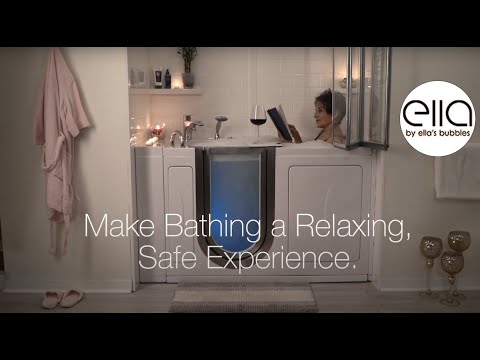
Chapters in this video
- 0:00 Bathroom Slip-and-Fall Accidents The video highlights the high number of daily bathroom slip-and-fall accidents worldwide.
- 0:12 Ella's Bubbles Walk-In Tubs A walk-in tub from Ella's Bubbles offers comfort, convenience, independence, and safety.
- 0:25 Relaxing and Safe Bathing Bathing becomes a relaxing and safe experience with an Ella's Bubbles walk-in tub.
Common Questions
Do all Ella walk-in tubs have a slip-resistant floor?
How high is the step into an Ella walk-in tub?
Which door style is best for a wheelchair user?
Can the seat height be adjusted on a walk-in tub?
Can more grab bars be added around the tub?
Is an inward or outward door safer for daily use?
About this guide. Answers in the Ella’s Bubbles Support Center are compiled from real conversations with tub owners, our technicians’ notes and the product documentation, then reviewed by our team. Tub models and options have evolved over the years, so a detail here may differ slightly from your exact tub. If something looks different on yours, send us your serial number and a specialist will confirm it for your model.
Did this solve your question?
If not, open a ticket and our team will pick it up from here.
Open a Support Ticket Videos